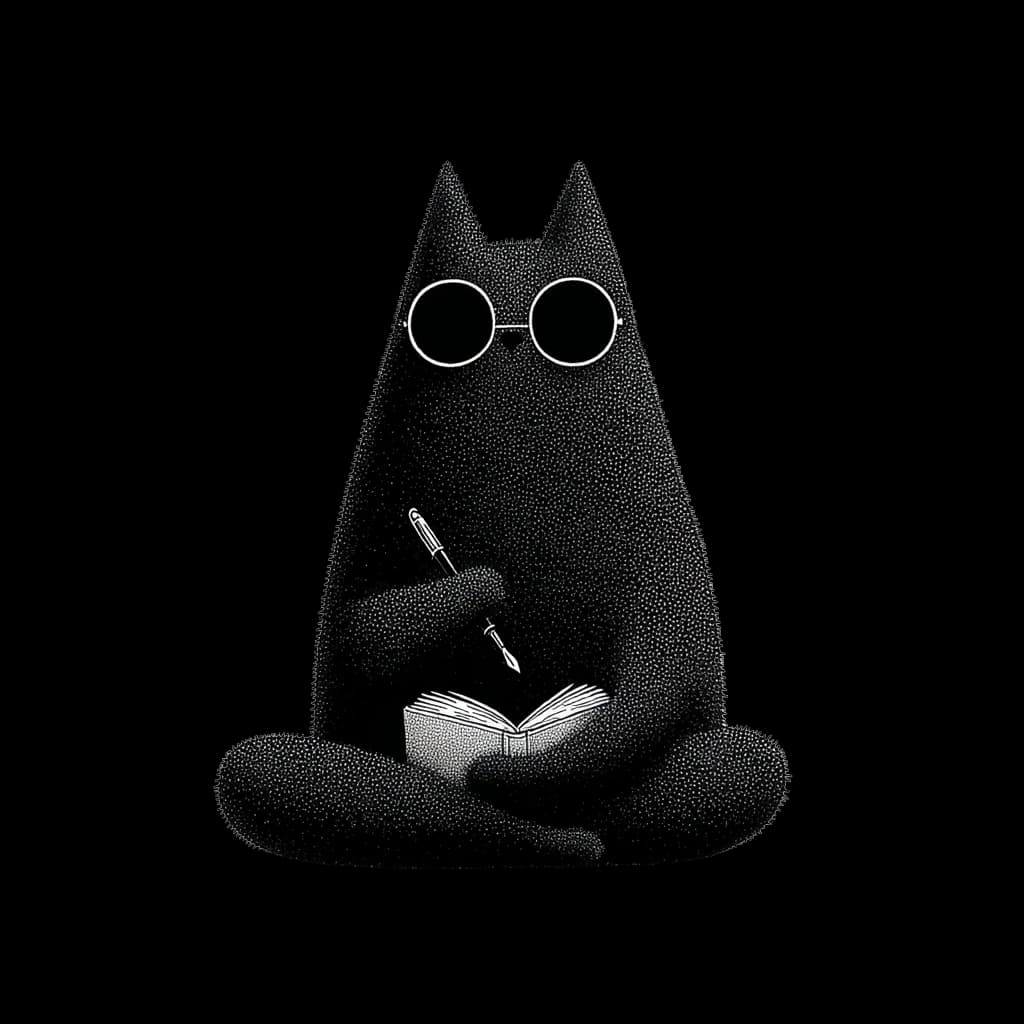
A Moon Journal pairs a changing sky with a few words about your life. The lunar phase supplies a rhythm for returning to the page; it does not need to explain your mood. A useful practice is brief enough to continue and honest enough to include days when nothing feels especially cosmic.
Make the first version small
Begin with five minutes, one place to write, and a prompt you can answer without preparation. You do not need a beautiful notebook or a perfectly consistent routine. A few sentences on a quiet morning are as valid as a longer entry after a busy evening. The main requirement is that the words are yours.
Choose a moment that already exists in your day: after breakfast, before an evening walk, or when you put your phone down for the night. If you miss it, resume at the next opportunity. Turning an observation practice into a streak to protect can make it harder to be truthful about the days that matter.
Separate the scene from the interpretation
Give your entry two parts. First, describe the scene in concrete terms: ‘I changed the plan twice and felt rushed before meeting my friend.’ Then add a possible interpretation: ‘Perhaps I wanted more certainty than I had.’ This separation keeps the journal from becoming a collection of conclusions without context.
Note the lunar phase if you want, but do not make it responsible for everything that happened. Sleep, workload, conversations, and ordinary circumstances can all matter. You can write ‘full moon’ beside ‘felt tired’ without claiming that one caused the other. Observation becomes more useful when there is room for several explanations.
Give each phase a gentle question
You can use the new moon to ask what you want to begin, a quarter phase to ask what needs attention, and the full moon to ask what has become clearer. These are writing conventions, not instructions from the sky. If a different question fits the day better, use it instead.
For example, a full-moon entry might be about recognising that an activity no longer interests you. It might equally be about enjoying a meal with someone you missed. There is no requirement to feel dramatic or transformed. Let the prompt lead to the scale of experience you actually have.
Return to an earlier entry
When you revisit a phase, read one previous entry before writing a new one. Look for a change in language, a repeated concern, or an assumption that no longer fits. You may discover that a question became less urgent, that your situation changed, or that you have been more consistent than you remembered.
Avoid reading the old entry as a prediction to confirm. If you wrote that you wanted more quiet and then had a busy month, you have not failed a lunar assignment. Ask what made the intention difficult and whether it still matters. The journal is a record of a moving life, not a promise to remain the same.
Keep the practice yours
After a few entries, decide what to keep. Some people prefer a repeated prompt; others want free writing with a date and phase at the top. You might add a simple note about where you were or who you spoke with. Keep only the details that make returning to the entry meaningful.
Luvsa’s Moon Journal offers phase-based prompts and saved reflections. Some expanded journal tools are part of Pro. Whether you write in the app or elsewhere, the useful part is the conversation between your earlier words and your present perspective. End an entry when you have said enough, even if that is only a sentence.
Keep what opens a useful question.
Let your experience have the last word.